
Last updated 1 September 2026
It usually starts with something small. A new pair of shoes that rubbed. A nick from a nail clipper. A blister after a long day out.
Someone with normal sensation feels it straight away and adjusts. That is the heart of the problem, because many people with long standing diabetes cannot feel it at all.
Why a small wound turns serious
Three things go wrong at once, and each makes the others worse.
Nerve damage. Diabetic peripheral neuropathy reduces sensation in the feet. Pain is protective. It tells you to stop walking on a sore spot and look at what is happening. Without it, a person can walk on an open wound for days.
Reduced circulation. Diabetes affects the blood vessels supplying the lower leg and foot. Healing needs blood, and blood carries oxygen, nutrients, immune cells and any antibiotic you take.
Weaker defence against infection. High blood glucose impairs white blood cell function, so bacteria get a foothold.
Together these produce a familiar pattern. A minor injury goes unnoticed, becomes an ulcer, heals slowly because the blood supply is limited, and becomes infected because the immune response is blunted.
The picture in Malaysia
The National Health and Morbidity Survey 2023 found that 15.6 percent of Malaysian adults have diabetes, made up of 9.7 percent already diagnosed and 5.9 percent who had raised blood glucose without knowing it. Roughly two in five people with diabetes were unaware of it.
Research using the National Diabetic Registry followed 362 patients with diabetic foot ulcers in Kelantan diagnosed between 2014 and 2018. Of those, 18.2 percent went on to have a lower limb amputation. The same paper noted diabetic foot ulcer prevalence in Malaysia of roughly 5 to 10 percent among people with diabetes.
Signs to act on
See a doctor promptly if you notice any of the following.
- Any break in the skin of the foot that has not healed within a week or two
- Redness, warmth or swelling anywhere on the foot
- Discharge, wetness inside a sock, or an unusual smell
- Numbness, tingling, burning, or a feeling of walking on cotton wool
- A change in the shape of the foot, or a toe that has started to claw
- Skin that has turned black or very pale
- Fever together with any foot wound
One point is consistently underestimated. A foot ulcer that does not hurt is not reassuring. It usually means the nerves are damaged, so absence of pain is part of the problem rather than evidence that things are fine.
What proper treatment involves
Effective care is a set of things done together, and skipping any one undermines the rest.
Offloading. Taking pressure off the wound, through specialised footwear, a cast, a walker or crutches. A wound on the sole cannot heal while it is stood on daily.
Debridement. Clinical removal of dead tissue so healthy tissue can close the wound.
Treating infection. Antibiotics guided by what is actually growing, with imaging if bone involvement is suspected.
Assessing blood supply. If the arteries in the leg are significantly blocked, dressings alone will not heal the ulcer. This assessment often decides the outcome.
Blood glucose control, appropriate dressings, and regular review.
Where hyperbaric oxygen therapy fits
Because low tissue oxygen sits at the centre of the problem, hyperbaric oxygen therapy has been studied as an addition to standard wound care. You breathe oxygen inside a pressurised chamber, which dissolves far more oxygen into the blood plasma so it can reach tissue that a damaged blood supply serves poorly.

Enhancement of healing in selected problem wounds is a recognised indication in hyperbaric medicine.
One example gives a sense of what has been measured. A Swedish randomised, double blind, placebo controlled trial, published in Diabetes Care in 2010, gave 94 patients 40 sessions over eight weeks alongside standard wound care. Complete healing at one year was achieved in 52 percent of the treated group, against 29 percent of those given the placebo. Among patients who completed more than 35 sessions, the figures were 61 percent against 27 percent.
Results across studies vary, and researchers continue to debate how much difference the treatment makes to the risk of amputation specifically. What the evidence supports is that it can help selected patients who complete a full course, working alongside proper wound care rather than in place of it. Whether it suits any particular person is a clinical judgement, and no one can promise an outcome.
Hyperbaric oxygen therapy in KL
For patients in the Klang Valley, KLO2 Medspa provides medically supervised hyperbaric oxygen therapy in Kuala Lumpur. The service is led by a consultant dermatologist working with an internationally certified clinical team, and treatment is delivered in medical grade chambers at Menara UOA Bangsar.
If you are comparing options for oxygen therapy in KL, a few questions are worth asking anywhere.
Is a doctor assessing me before treatment starts, and is medical cover available during sessions? What is the operating pressure of the hyperbaric chamber in ATA, and what pressure will my protocol use? Who operates the chamber and what training do they hold? Will you write to my own doctor?
A centre that answers those clearly is treating this as medicine. Every hyperbaric chamber in KL should be able to state its pressure rating, because that is what determines whether it delivers the therapy described in the clinical literature.
Hyperbaric oxygen therapy is prescribed after assessment, and whether it suits your situation is a clinical decision.
Prevention, in two minutes a day
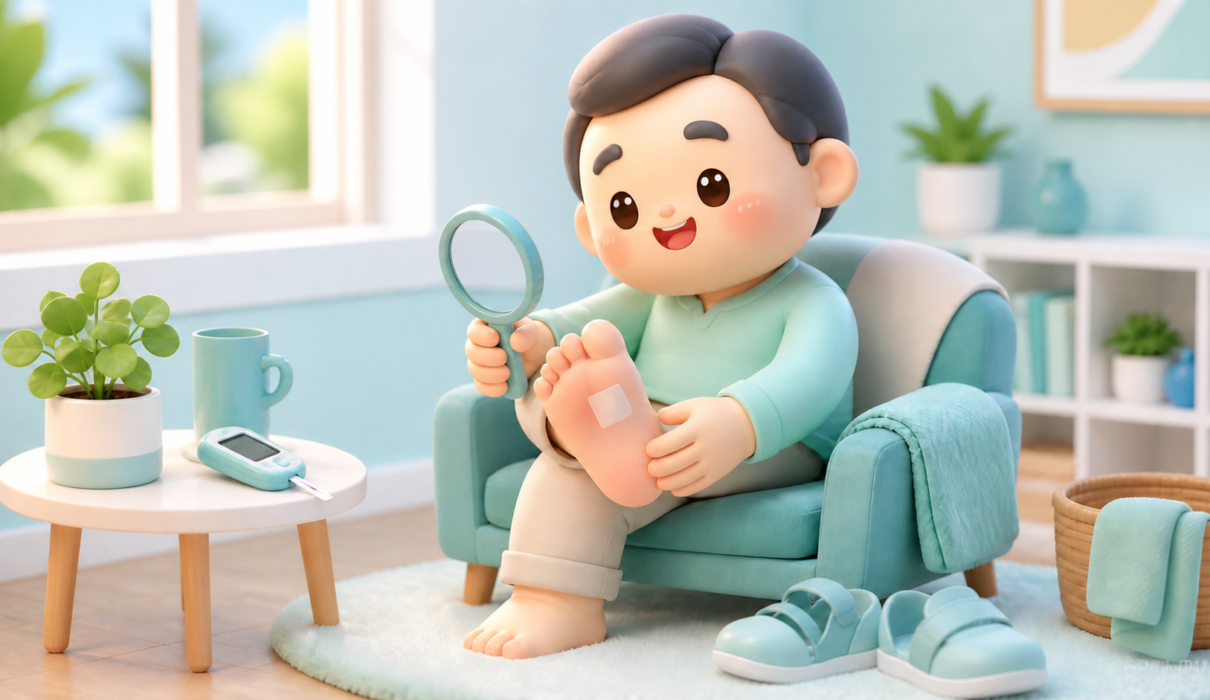
- Check your feet daily, every surface, including between the toes and the sole. Use a mirror on the floor or ask someone at home if you cannot see comfortably.
- Wash with lukewarm water and dry thoroughly, especially between the toes. Test the water with your hand or elbow, since neuropathy makes scalding easy.
- Moisturise dry skin, but not between the toes.
- Never walk barefoot, including indoors and at the mosque or temple. Check inside your shoes by hand before putting them on.
- Cut toenails straight across. Leave corns and calluses to a professional, and avoid corn plasters.
- Have a proper foot examination at least once a year, and more often if you already have neuropathy, poor circulation, foot deformity or a previous ulcer.
The difference in outcome between a wound treated in week one and the same wound treated in month three is considerable.
Frequently asked questions
Why does my foot ulcer not hurt? Most likely because diabetic neuropathy has reduced sensation in the area. Painless ulcers are common in diabetes and still need urgent assessment.
How long should a diabetic foot ulcer take to heal? It depends on depth, blood supply, infection and whether pressure is kept off it. Any wound not clearly improving over a few weeks needs review rather than more of the same dressing.
Can I treat it at home with antibiotic cream? Not as your only treatment. Topical products do not address blood supply, pressure or deep infection, and self treating at home is a common reason people present late.
Where can I get hyperbaric oxygen therapy in KL? KLO2 Medspa provides medically supervised hyperbaric oxygen therapy in Kuala Lumpur, at Menara UOA Bangsar. Treatment follows a medical assessment, since suitability depends on your condition and history.
Will hyperbaric oxygen therapy save my foot? No one can promise an outcome. In a double blind trial, 52 percent of treated patients had healed completely at one year against 29 percent on placebo, which is encouraging, though results vary between studies. It is used as an addition to proper wound care when a specialist judges it appropriate.
A note on this article. This is general health information, not personal medical advice. Everyone’s situation is different, and this article cannot account for your medical history, your medications, or your current condition. Always speak to your doctor or pharmacist before changing your diet, starting a supplement, or acting on anything you read here. If you are worried about your symptoms, contact your nearest clinic or hospital.
Guidelines and figures change over time. The information here reflects the sources available when this article was last updated, shown at the top of the page. Where a national guideline or registry is named, check the latest edition for the current position.
This article is for general information only. It is not medical advice. If you have diabetes and notice any wound, redness or swelling on your foot, please see a doctor promptly.